
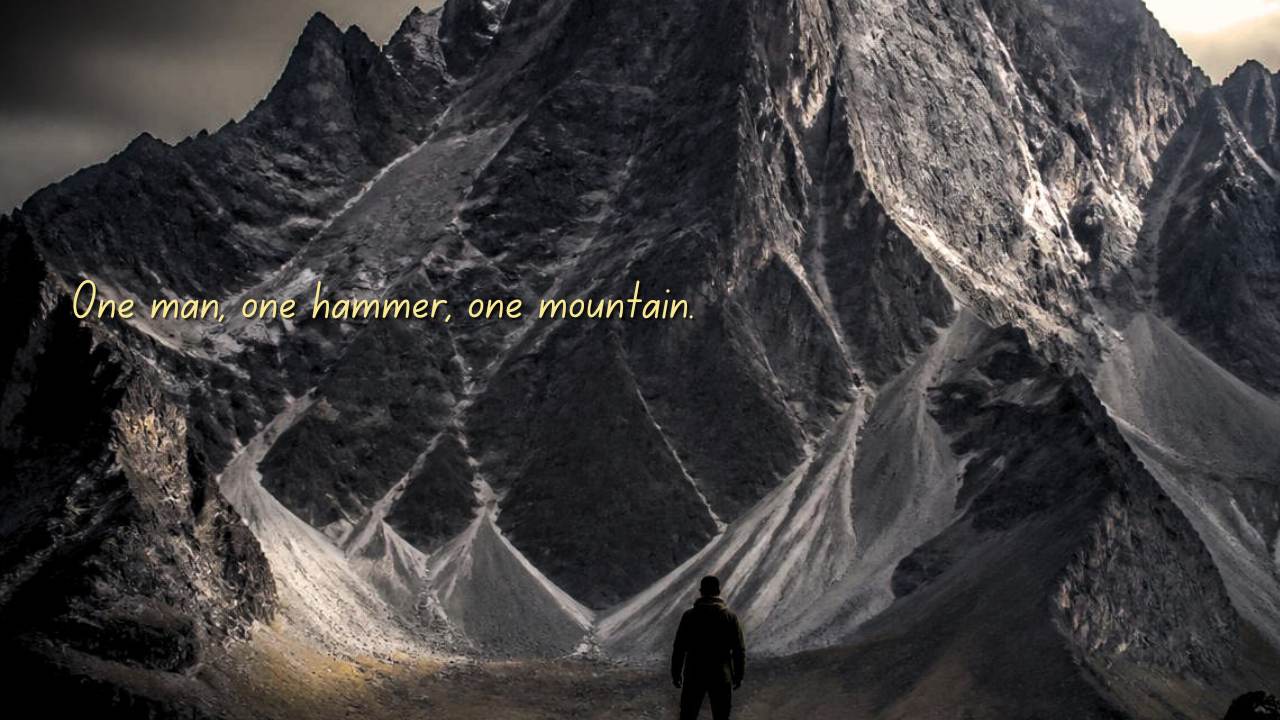
The Man Who Moved a Mountain began with a decision so impossible that most people laughed the moment they heard it. Not climb it. Not go around it. Remove it. To everyone around him, the idea sounded absurd. He wasn’t an engineer, he wasn’t wealthy, and he didn’t have machines, workers, or government support. All he had was a hammer, a chisel, and a goal so unbelievable that most people assumed he had lost his mind.
His name was Dashrath Manjhi, and he lived in a small village in India. For generations, a massive mountain had stood between his village and the nearest town. It wasn’t just a geographical obstacle. It affected nearly every aspect of daily life. Reaching hospitals, schools, jobs, and markets required a long journey around the mountain. People had lived with the inconvenience for so long that most accepted it as something that could never change.
The Man Who Moved a Mountain Makes a Decision
Then something happened that changed the way Dashrath looked at that mountain forever. One day, his wife was seriously injured, and getting help was far more difficult than it should have been because of the barrier standing between the village and the outside world. While others saw a mountain, Dashrath began to see a problem. And unlike most people, he couldn’t stop thinking about it.
Instead of accepting reality, he made a decision that sounded impossible. Armed with nothing more than simple hand tools, he began cutting into solid rock. Day after day, he returned to the same spot and continued his work. The mountain showed no signs of changing. Weeks passed. Then months. The task seemed so hopeless that many people openly laughed at him. Some called him foolish. Others felt sorry for him. Almost nobody believed he would make any real progress.
When Nobody Believed Him
Yet Dashrath kept working. When the weather was unbearable, he worked. When people mocked him, he worked. When there was no visible reward for his effort, he worked. The years continued to pass, and what began as a seemingly ridiculous dream slowly turned into something else. Little by little, the mountain started to change. The cuts became deeper. The pathway became wider. What once looked impossible started to look unlikely. Then it started to look possible.
Most people never see the results of two decades of determination. Dashrath Manjhi did. After more than twenty years of relentless effort, he had carved a path through the mountain. The route that once forced villagers to travel long distances was dramatically shortened. Access to essential services became easier. Opportunities that had once felt far away became more reachable. The obstacle that generations had accepted was no longer the same.
The most remarkable part of the story is not the mountain itself. It is the fact that the man who changed it had none of the advantages people usually associate with extraordinary achievements. He had no wealth, no special education, and no powerful connections. What he possessed was the willingness to continue long after everyone else would have stopped.
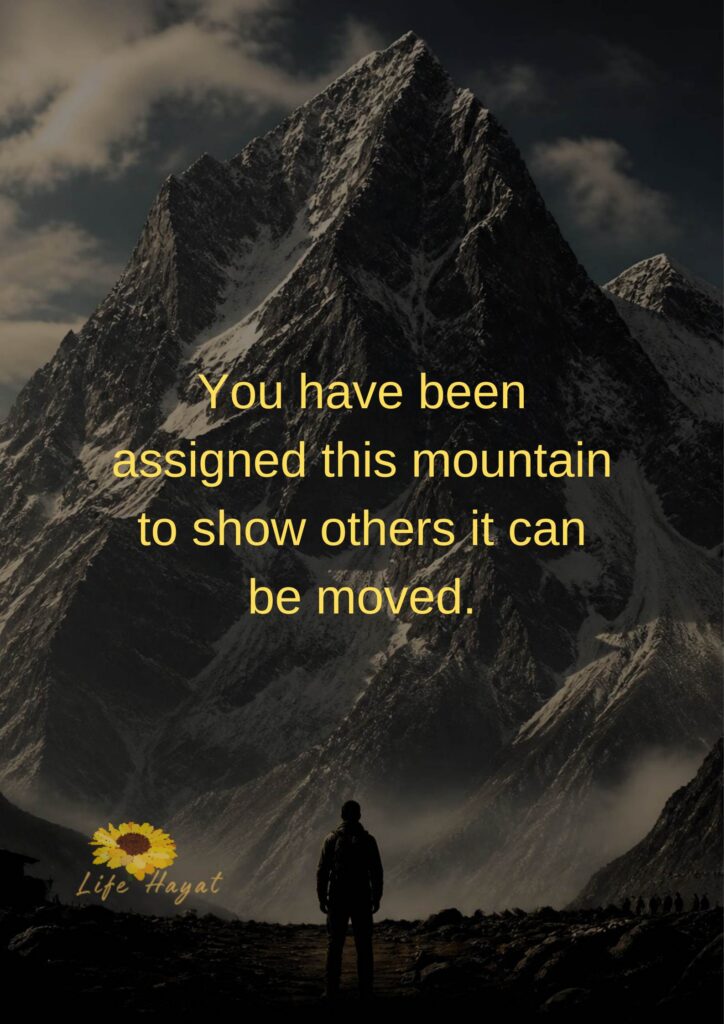
Today, Dashrath Manjhi is remembered as the Mountain Man. His story has inspired millions of people around the world because it challenges a belief many of us hold without realizing it: that some problems are simply too big for one person to solve. Dashrath spent more than twenty years proving otherwise.
Most people saw a mountain and accepted it. One man saw a path hidden inside it. And because he refused to give up, future generations were able to walk through it.
The mountain in Dashrath Manjhi’s story was made of rock, but most of us face different kinds of mountains. They may be obstacles, setbacks, fears, or goals that seem impossibly far away. His story reminds us that remarkable achievements rarely happen all at once. They are built through small actions repeated over and over again, long after excitement fades and long after others stop believing. Sometimes the difference between impossible and possible is simply refusing to quit.

“If i had a Hammer”
Indeed Dear Chaymaa
“If I Had a Chisel”
Per the True Story of
Dashrath Manjhi i could
Move a Mountain By Spending
Two Decades Chiseling a Tunnel
Through It Freeing the Villagers from
Having to Travel Around It A Straight Shot
to more
Freedom Indeed
Reminds me of “Coral Castle” in Florida
A Castle Built With 30 Ton Coral Stones In
Decades Eventually By a Close to 100 Pound
Man Who was in His Sixties Finishing His Life Long
Endeavor of Coral Castle For the Muse of an Altar
He Created
For the Unrequited
First Love Of His
From a Foreign Land
Hehe as Legends come and go
Some Folks Say He Used Helium
Balloons to Float the 30 Ton Stones in Place
Yet More Likely Not Unlike How the Pyramids
In Egypt came to Be Closer to Your Home in Cairo Egypt
Ah Yes the Science of Balance
FRiEnDS With Gravity
Hehe Not Unlike
How i Move my
250 Pound Body
Yes Spiraling Like a
Free Style Sufi Dervish
23,844 Miles of Public Dance
In 153 Months to Distribute Free
Smiles for the Simple Feat of Each
And Every Move that floats my Body
On Terrestrial Smooth Store Dance Floors
It’s A Best way to travel the Distance
Around the Equator (24,901) Miles by
A Real Gift of Christmas Day This Year all Free
Indeed No
Altar my
FRiEnD
Humanity
Is Enough to Please..:)
What an incredibly inspiring story about determination and overcoming the impossible.